
THE HISTORY OF 100 SIBLEY
One address.
Many chapters.
A saloon, a garage, a lodge, a boxing ring, City Hall, and a favorite table by the river. The history of 100 Sibley is a history of people finding new ways to use the same remarkable place.
What’s next?
Tommy and Lacey Parmeter became the building’s owners in September 2026. As its next chapter takes shape, we’re gathering the stories, photographs, and memories that connect it to Hastings.
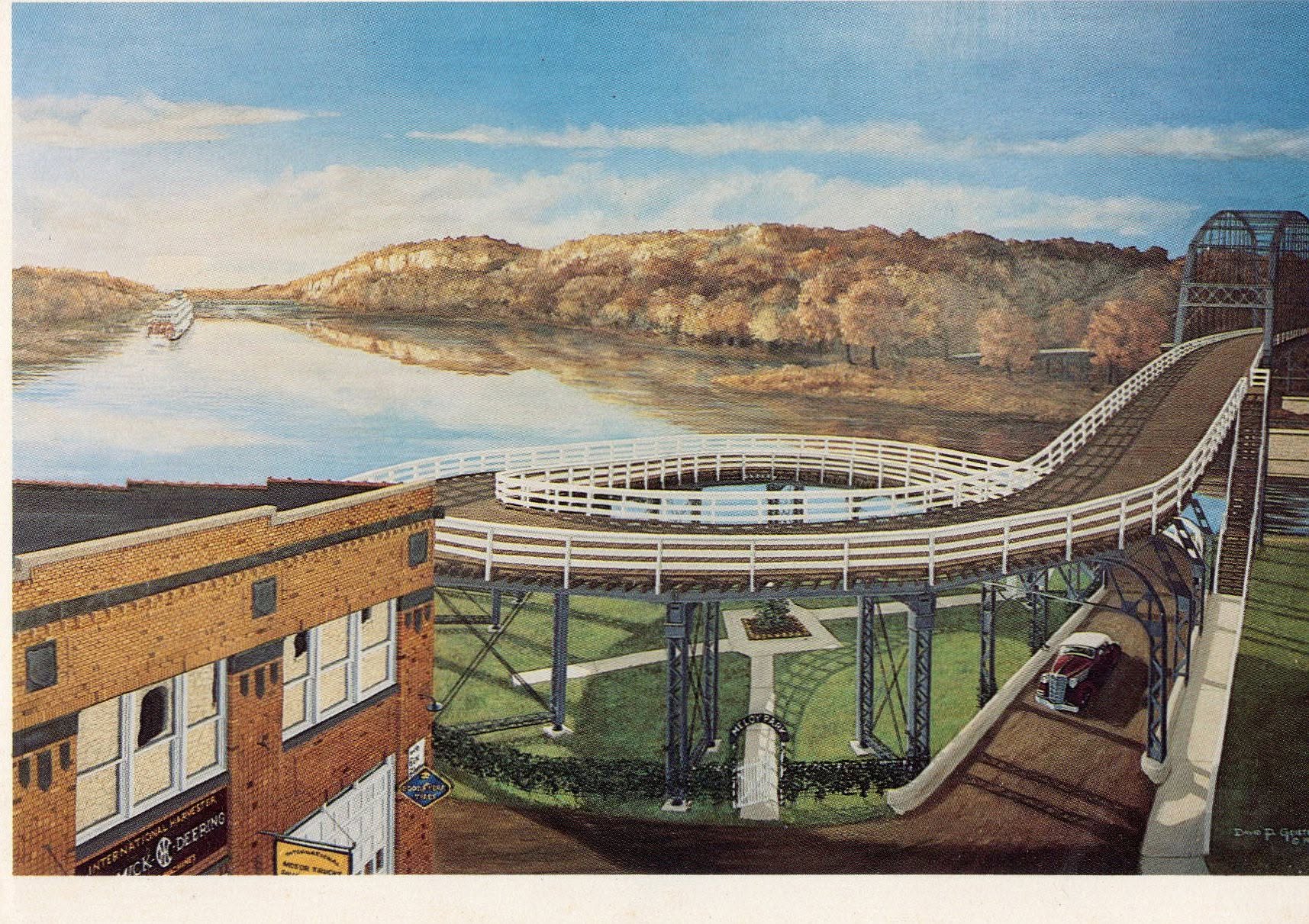
100 Sibley at the left of a historic riverfront postcard. Date and creator not identified.
BEFORE 1917
Before the brick building.
The story of this address begins before the building we recognize today. Around 1910, Mather’s Saloon occupied the site. Local newspaper accounts also describe an earlier grocery and confectionery here.
There may be an even older connection. A 2011 Hastings Star Gazette history points to an 1871 newspaper item about G. Van Inwagen purchasing a building described as a casino near First National Bank, with plans for a restaurant and confectionery. It reports that Mr. Stapf later operated a grocery and confectionery at Van Inwagen’s Sibley Street location after Van Inwagen moved in 1876.
1917–1933
Kingston’s Garage.
In 1917, Lloyd P. Kingston gave the property its automotive chapter and the substantial brick building that still stands here. Mike Heffron’s newspaper history dates the work to 1917; Katrina Styx’s later account describes Kingston rebuilding the earlier structure in brick around that year.
Kingston had worked his way from a dray-line operator to a motor-parts and oil-business owner. He became a Chevrolet and Buick dealer in 1916, also selling Goodyear and Goodrich tires. At 100 Sibley, cars could reach an upstairs showroom: former Levee Café owner Gary Bayer recalled a crank elevator that hoisted vehicles to the second floor.
The garage kept pace with the automobile age. A November 1921 improvement brought a pump capable of dispensing five gallons per stroke. In 1929, Kingston sold his regional oil-station interests to Sinclair while retaining his garage and Chevrolet dealership. In January 1933, he opened a new showroom and garage on Vermillion Street, making room for the next business at 100 Sibley.
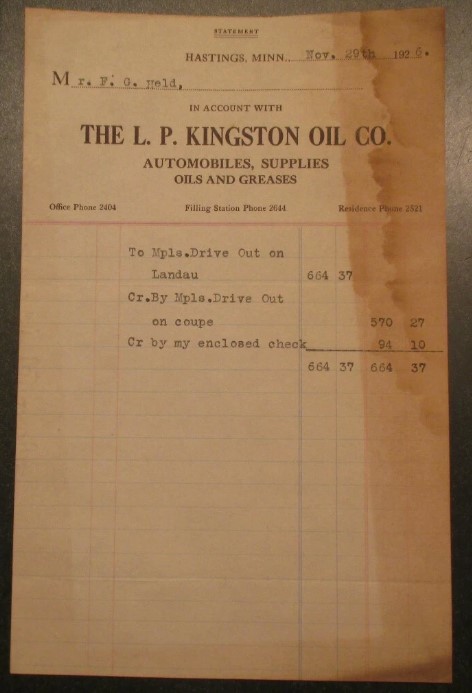
A Kingston Oil Company statement, dated November 29, 1926.
A RIVERFRONT PERSPECTIVE
The view from 100 Sibley.
Some familiar views of the Spiral Bridge began right here. The first photograph was taken from atop 100 Sibley and features the bridge’s extraordinary circular approach. You can see the roof tiles of 100 Sibley at the bottom. The second was taken from the main span of the bridge and shows 100 Sibley in the background during its Bahls Motor & Implement era. Right next door is the historic Meyers Company building.
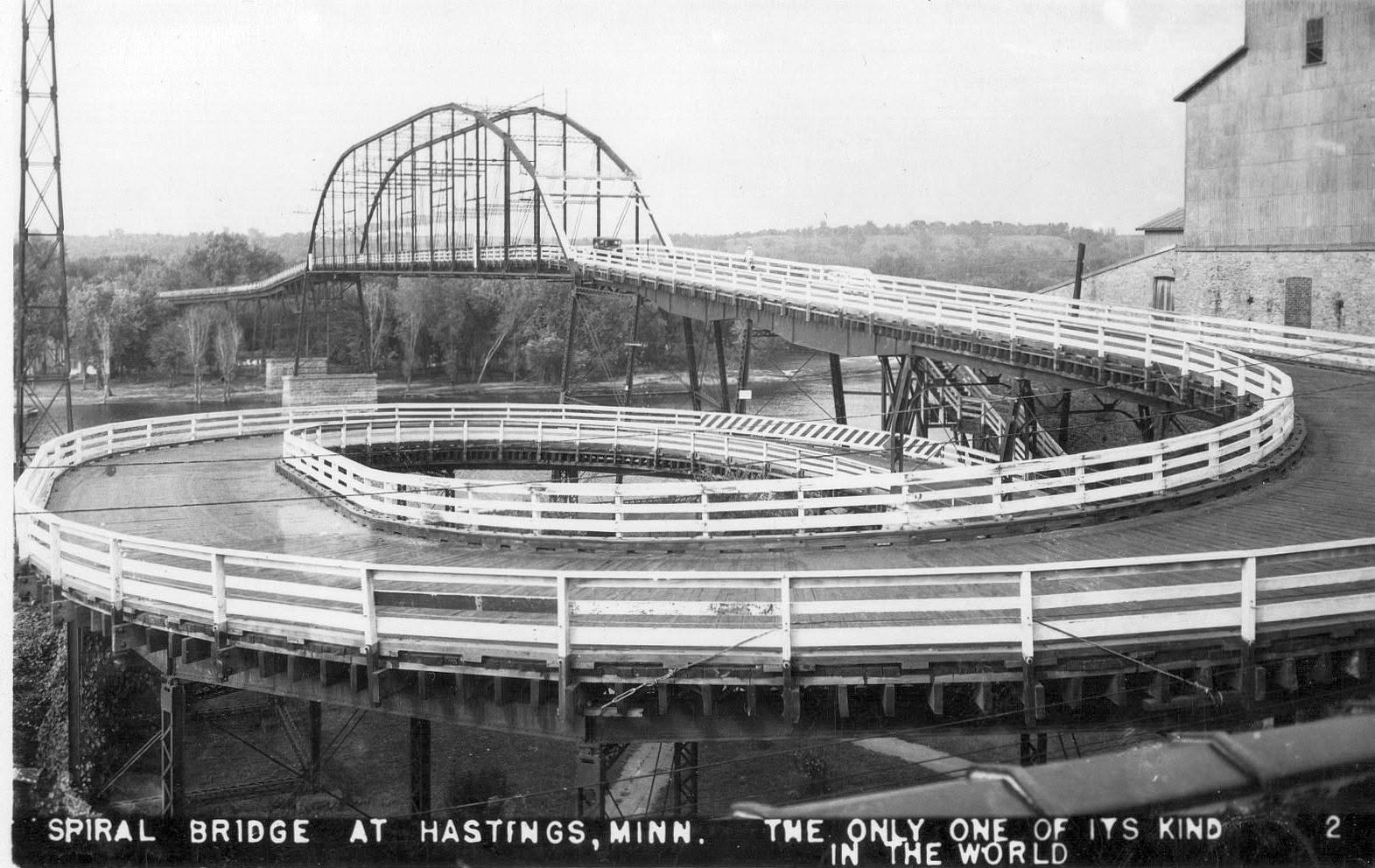
The Spiral Bridge from atop 100 Sibley. Photograph date and creator not identified.
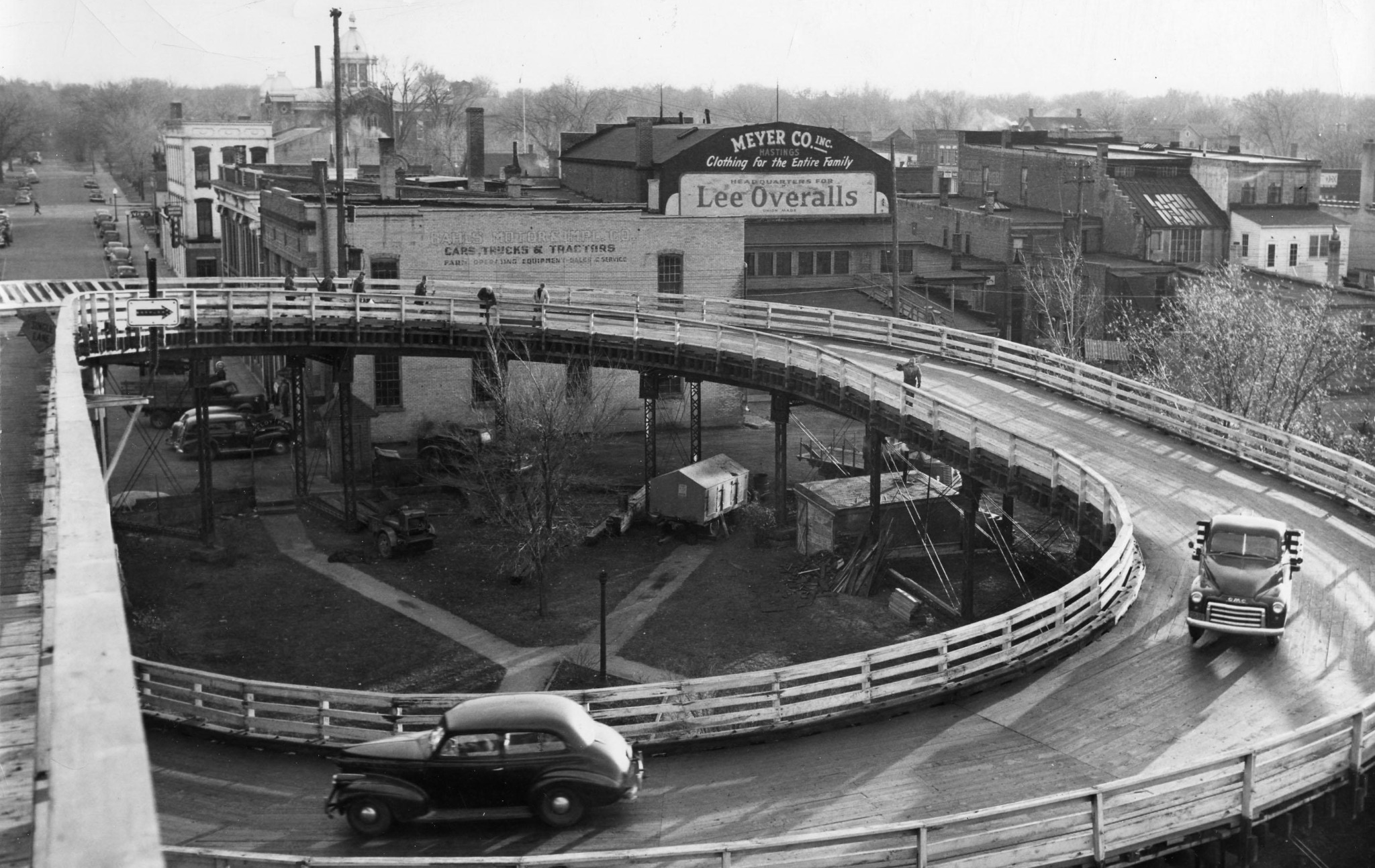
Automobiles approaching Sibley Street from the Spiral Bridge. Photograph date and creator not identified.
1933–1948
Bahls Motor & Implement.
Brothers Ben and George Bahls brought another kind of working life to the building. Their implement business began in Cottage Grove in 1921 and moved to Hastings after International Harvester sought representation in the county seat.
In 1933, the Bahls brothers rented 100 Sibley from Kingston for a garage and service station. They bought the property in 1934 and brought in the implement business. Bahls Motor joined in 1937, creating Bahls Motor and Implement, with farm machinery, trucks, and Dodge and Plymouth automobiles all part of the story.
A 1937 advertisement, recalled in the 2011 newspaper history, offered a Dodge sedan for $640. Photographs from the era show the storefront covered in automotive and equipment signs, with vehicles gathered outside.
Bahls relocated to 10th and Vermillion in 1948. The building was ready for a different mix of shops and community uses.
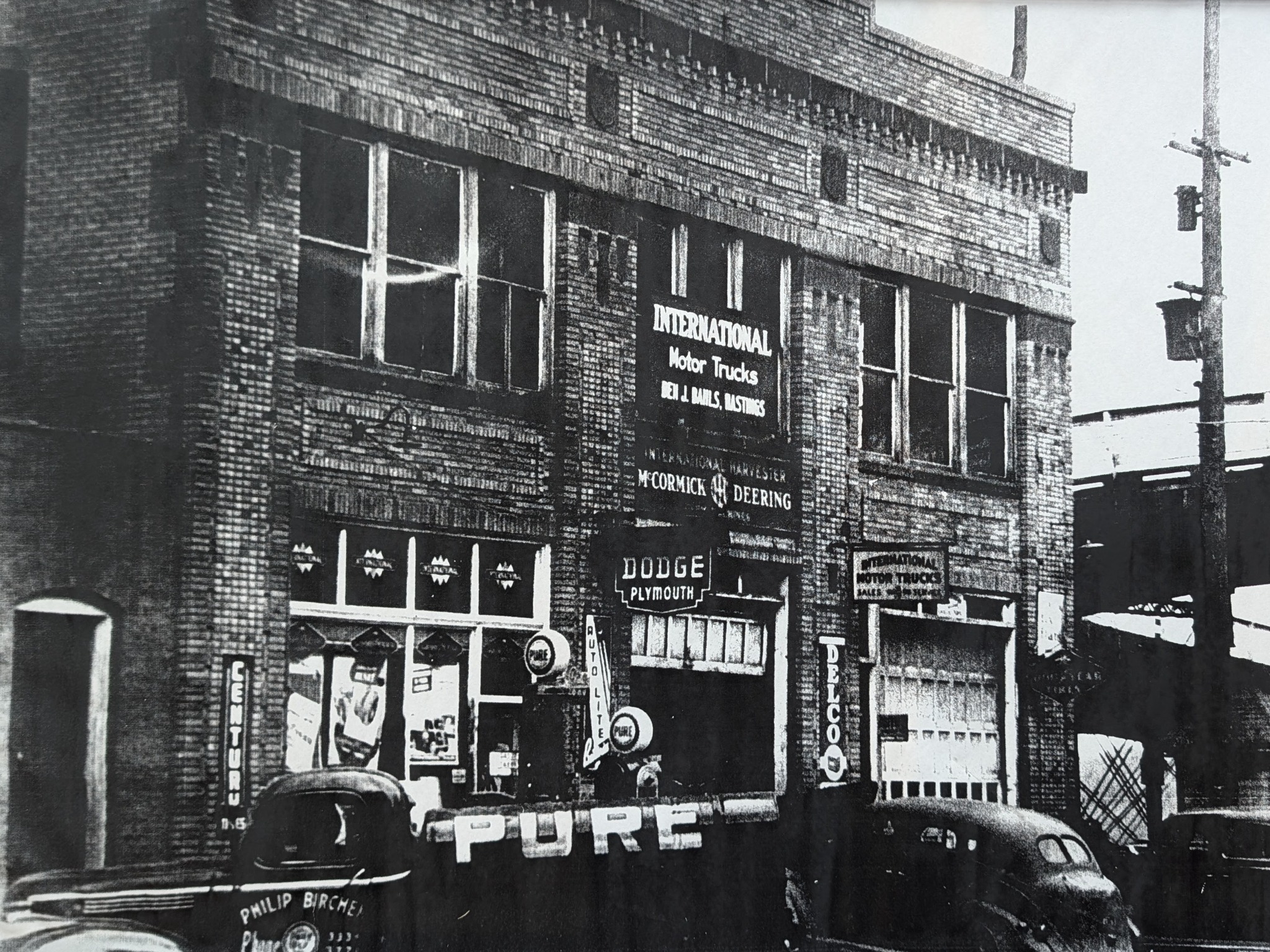
Bahls Motor and Implement era, 1933–1948. The exact photograph date and photographer are unknown.
1948–EARLY 1960s
Shops below.
A lodge above.
After Bahls moved out, clothing and floral businesses occupied the property. In 1955, the local Eagles organization purchased the building and made the second floor its lodge hall.
The first floor was divided between Phil Johnson’s men’s clothing store and Meloy Florist, owned by Olaf Nielson. Upstairs, Spiral Bridge Aerie No. 2212 provided a place for members to gather and serve the community.
One tradition was the Eagles’ Christmas toy drive. Members collected and repaired toys for local children; the 2011 newspaper history reports approximately 1,000 toys repaired in 1957. The Aerie celebrated its twenty-fifth anniversary in 1961, honoring thirteen original members.
1950s & BEYOND
A ring beneath it all.
While the Eagles met upstairs, another community took shape below. The Eagles allowed the VFW-sponsored Hastings Golden Gloves program to establish a practice ring in the basement without paying rent. The former automobile space became a place for footwork, training, and the sound of a heavy bag.
Coaches Marvin Biskupski and Alan Cowden trained a team whose members included Tom Niederkorn, Duane Mann, Jim White, Jon Hankes, Denny Kordosky, and Jerry Murtaugh. In 1960, Hastings won the Upper Midwest State Golden Gloves Championship on its first attempt, according to both newspaper histories. Mann, Niederkorn, and Kordosky also earned individual titles.
A separate, undated clipping records more Hastings boxers. Andy LaCoursiere and Mark Storlie won gold at the Minnesota Junior Olympics, with Jim Freiermuth earning silver and Larry LaCoursiere and Curt Price earning bronze. That team was sponsored by the Hastings VFW and coached by Jerry LaCoursiere and Bob Anderson.
Decades later, the basement ring and its original ropes would be rediscovered at 100 Sibley.
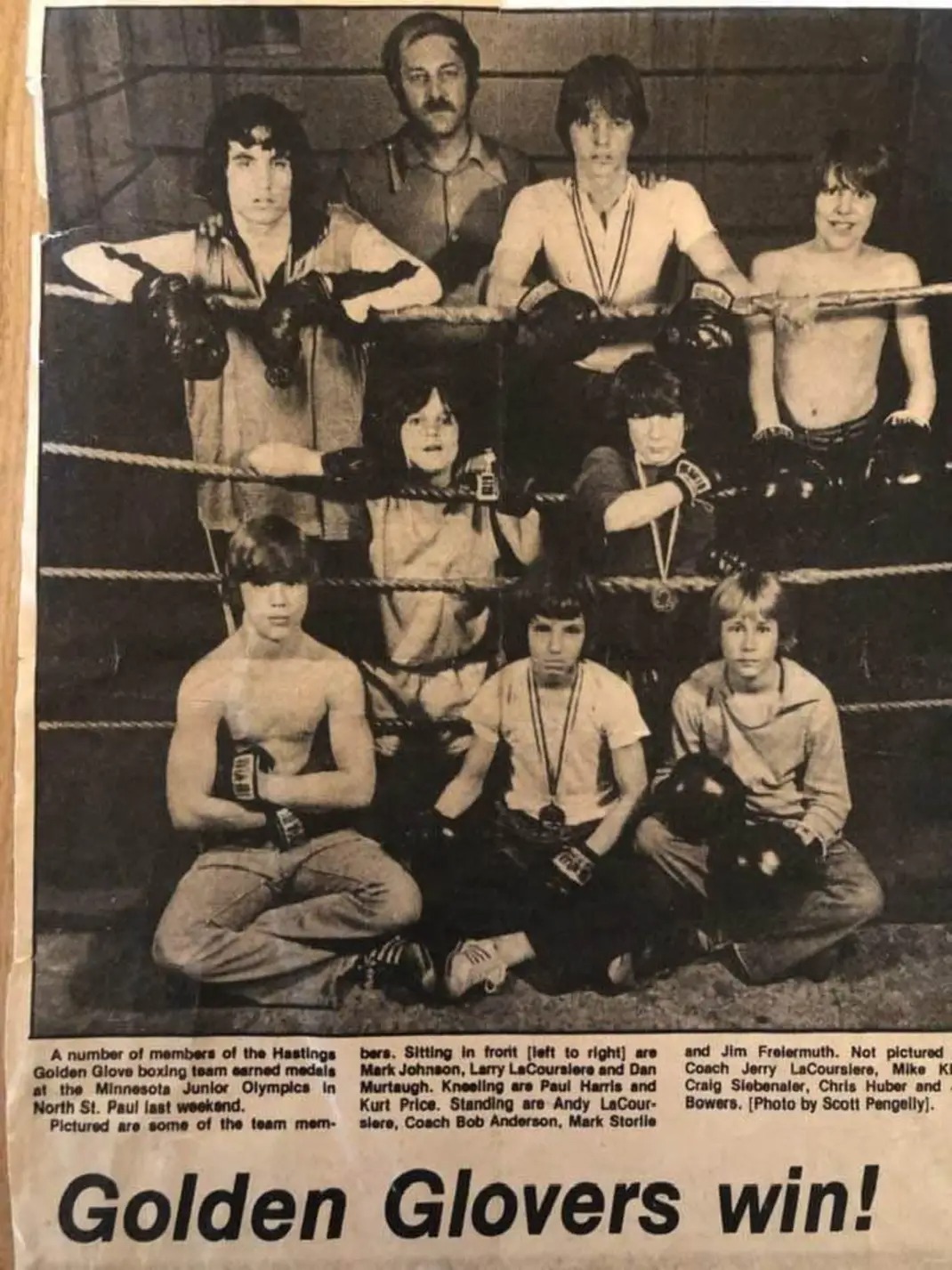
Hastings Golden Glove team members pictured in an undated newspaper clipping. Photograph: Scott Pengelly.
1960s–1993
When this was City Hall.
The City of Hastings became the building’s next major occupant. The two newspaper accounts record slightly different milestones: Heffron places City Hall’s move here in 1963, while Styx dates the city’s purchase to 1964. Those may describe separate events; the distinction is still being researched.
The police department was initially on site, and the upper floor held municipal traffic court before becoming City Council chambers. Municipal offices filled the main floor. One surviving photograph records the building’s public role in three signs: County Court, City Hall, and Council Chambers.
The police offices later moved to an addition beside the fire station at Fifth and Eddy. City Hall remained at 100 Sibley until 1993, when it moved to 101 East Fourth Street. Former city administrator Dave Osberg remembered the close quarters here, and the river view he left behind.
Even after municipal offices departed, the building held onto traces of that chapter. Filing instructions remained on basement shelves, and old Hastings signs were among the items later found downstairs.
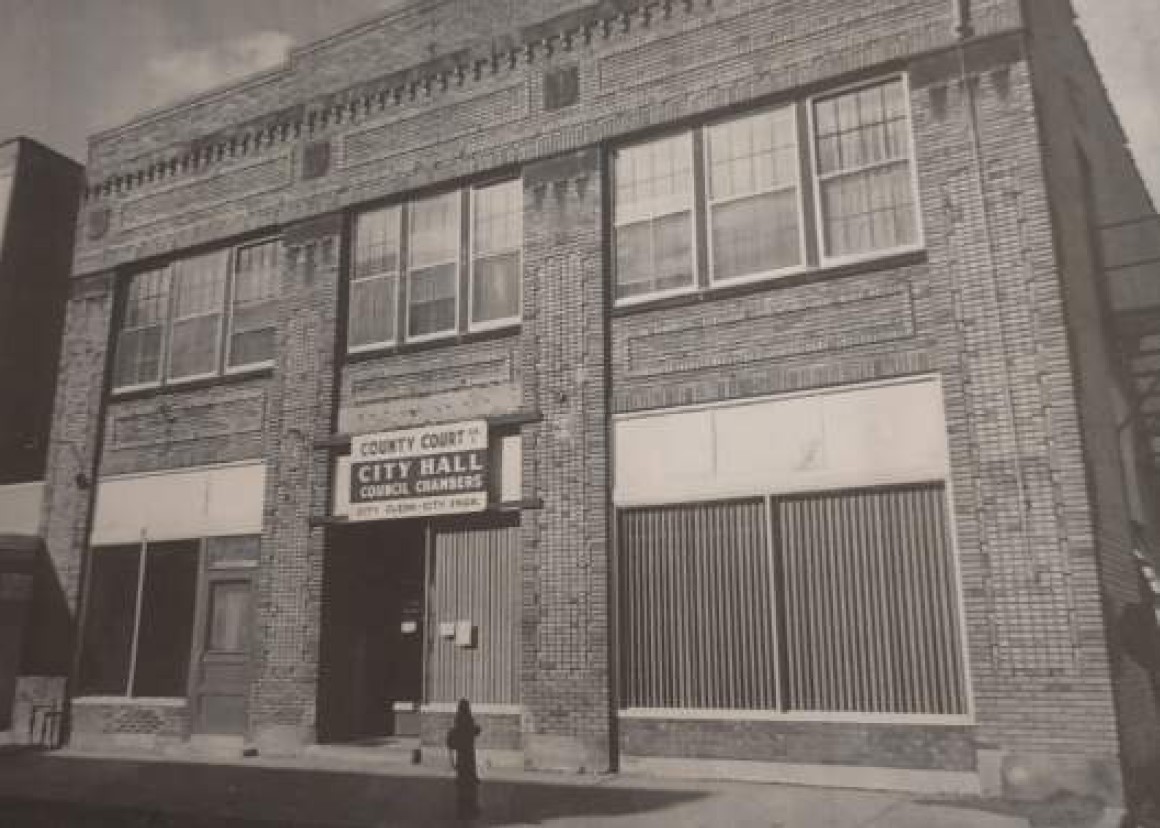
100 Sibley during its municipal years. Date and photographer not identified.
1995–2010
A new life as Levee Café.
Gary Bayer and Jim Shafer purchased 100 Sibley in 1995 and moved Levee Café here from its original Second Street location, which had opened in 1989. The café had outgrown its earlier home.
The 2011 newspaper account describes a $20,000 purchase conditioned on repairing the property and opening it as a café. Six weeks of work removed office walls and the former council chambers. In their place came dining rooms and a memorable toy train that traveled on a track near the ceiling.
By 2003, the café was owned by Jeff Kasa. That year, the staff served around ninety active-duty soldiers staying in Hastings, starting their cooking at about three in the morning. The building’s tradition of serving the community had taken another form.
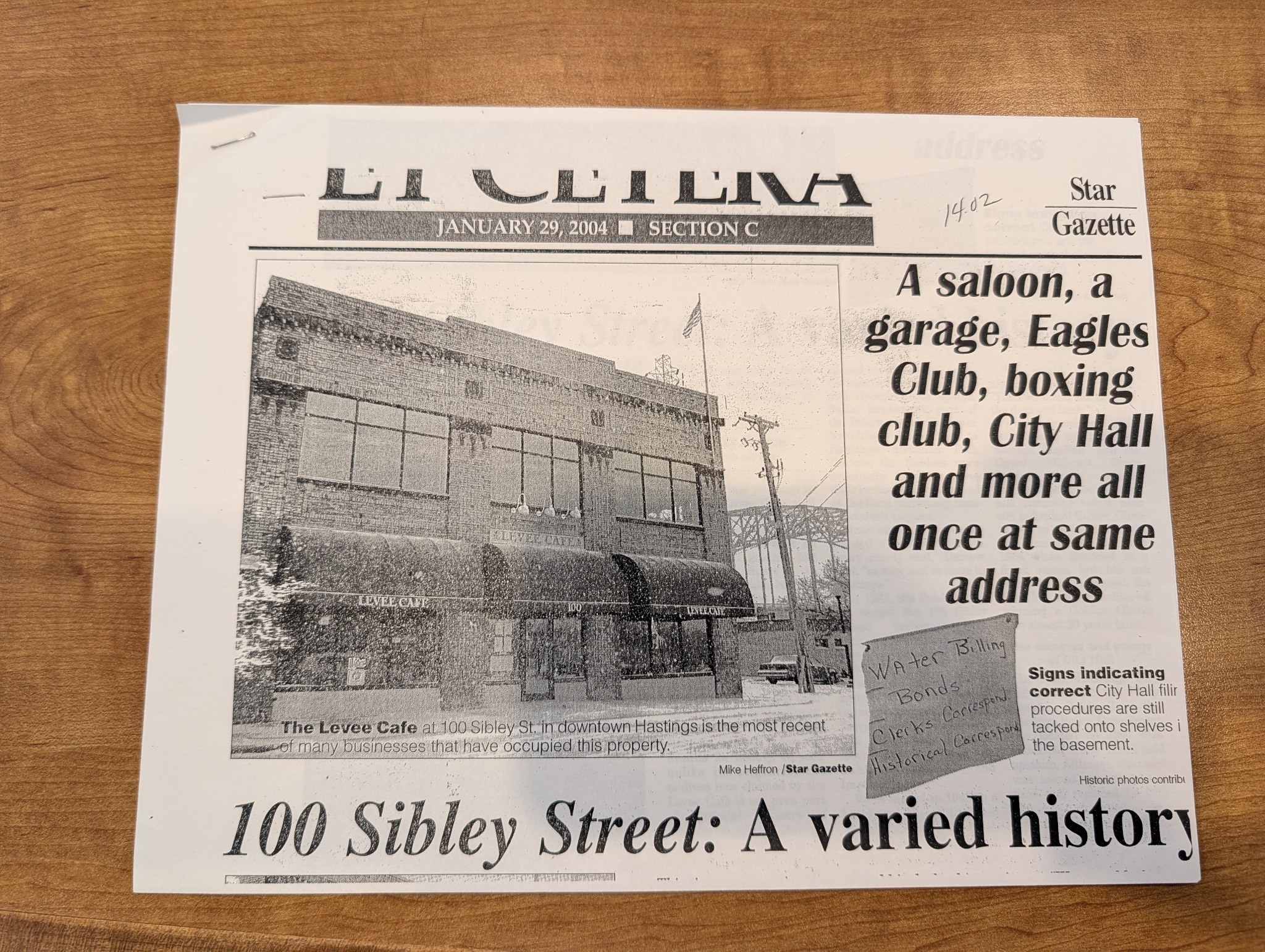
Levee Café in the January 29, 2004 Star Gazette. Photograph credited to Mike Heffron / Star Gazette.
2011–EARLY 2023
The Onion Grille years.
Wendy Dodge-Agen purchased the former Levee Café in late 2010 and began renovating it for The Onion Grille, which opened in 2011. She already knew the neighborhood: her father’s shoe store had stood across the street.
Preparing the restaurant revealed more than another dining room. Dodge-Agen found the old boxing ring and original ropes, which were reinstalled around it. The basement also held a concrete vehicle ramp from Sibley Street, a stairway with outside access, an old safe, historic Hastings signs, and a survival drinking-water drum associated with the National Fallout Shelter Program.
The 2011 account also describes a door that might have come from a jail cell. Its origin was not confirmed. Together, these finds helped make the building’s earlier lives visible during its restaurant years.
The restaurant also became a performance venue. Black Dirt Theater presented its dinner-theater production of On Golden Pond here in January 2017, another way for people to gather in the old building.
The Onion Grille became the name many people still associate with 100 Sibley. It had closed by early March 2023, when its restaurant and catering equipment was offered at auction. Its exact final day of service remains to be confirmed.
SEPTEMBER 29, 2026–
An old favorite.
A new chapter.
Tommy and Lacey Parmeter purchased 100 Sibley through Stratus Holdings, LLC on September 29, 2026. The response from the community has brought stories of meals, celebrations, workdays, boxing, and the many other ways people have known this address.
Our hope is to care for what makes this place special while making room for its next chapter. As plans take shape, we’ll keep sharing what we learn about the building and the people who have filled it with life.
This history is still growing. If you have an old photograph, a menu, a newspaper clipping, a date we can confirm, or a memory connected to 100 Sibley, we’d love to hear from you.
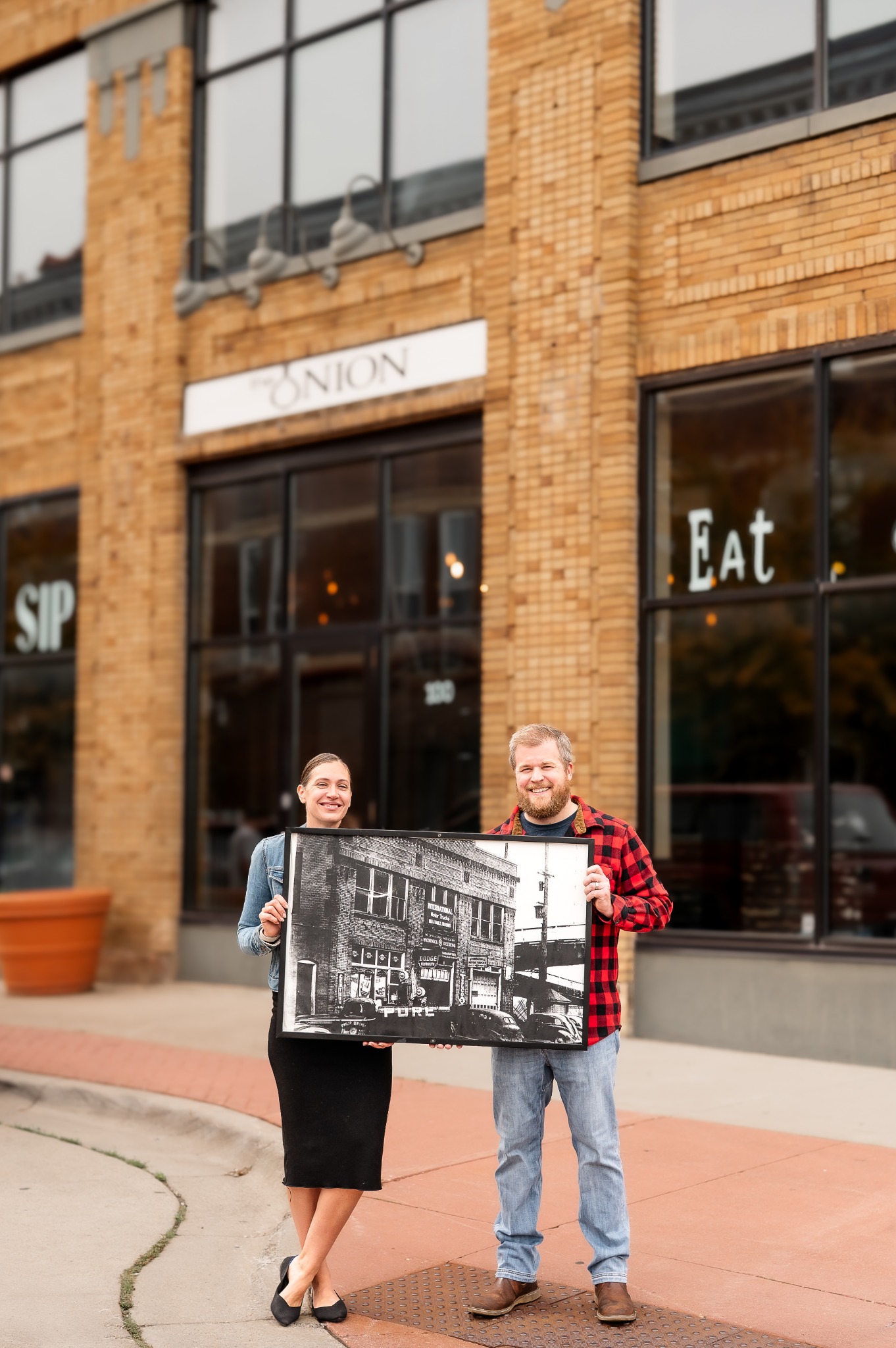
Tommy and Lacey Parmeter, the building’s new owners. Photograph: Kristen Calgaro.
The story is still being gathered.
This account draws on local newspaper histories, the photographs and clippings collected for 100 Sibley, and the current owners’ account. Some uses overlapped, and a few dates remain unresolved. New information and corrections are welcome.
Newspaper histories: Mike Heffron, “100 Sibley Street: A varied history,” Star Gazette, January 29, 2004, Section C; Katrina Styx, “The stories within the walls: 100 Sibley Street,” Hastings Star Gazette, October 20, 2011, page 11A. Also consulted: the undated “Golden Glovers win!” clipping and the Kingston Oil Company statement.
Later chapters: Black Dirt Theater’s 2017 production archive; Auction Masters’ Onion Grille liquidation listing and March 8, 2023 auction announcement. Rooftop viewpoints identified by the owners.
Photographs: Kristen Calgaro (Tommy and Lacey); Scott Pengelly (boxing team); Mike Heffron / Star Gazette (Levee Café clipping). Creators of the other historical images have not yet been identified. Dates shown for an era do not establish the precise date of an undated photograph.